Sewage Cleanup in Los Angeles, CA
The shower drain backed up while the washing machine was running. Now there is gray water with a smell you recognize across the bathroom floor and into the hall carpet. This site connects you by phone with an independent local provider who does sewage cleanup in Los Angeles County.
What the crew does first
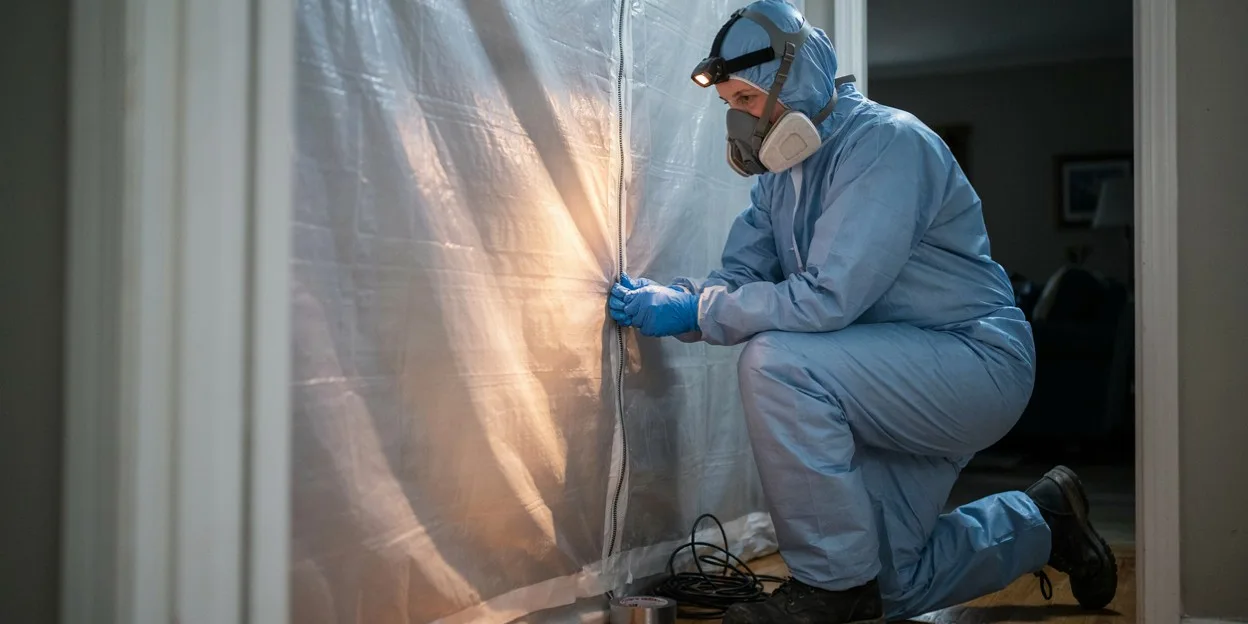
Sewage is Category 3 water. It is handled differently from a clean pipe break. The crew arrives in protective gear and sets up containment with plastic sheeting to seal the affected rooms off from the rest of the house. Then they extract the standing water. Air scrubbers with HEPA filters usually run during the work.
Next they remove what cannot be cleaned. Carpet, pad, and wet drywall in the affected zone come out and get bagged. Hard surfaces are cleaned, then disinfected, then dried with air movers and dehumidifiers. A moisture meter check comes before anything is rebuilt.
What to do in the next hour
Stop using water in the house. Every flush, shower, and load of laundry sends more water to a line that is blocked. Keep children and pets out of the affected rooms and close the door.
Do not mop it up or run a household vacuum. If sewage touched something you want to keep, set it aside in one spot rather than carrying it into a clean room. Take photos from the doorway. Then call a plumber for the blockage and make the call here for the cleanup. Those are two different jobs.
What is usually saved and what is not
Porous materials that soaked up sewage do not come back. Carpet, pad, particleboard, upholstered furniture that sat in it, and wet drywall are removed. Paper goods, cardboard, and mattresses in the affected area are usually discarded.
Tile, sealed concrete, metal, and solid plastic can be cleaned and disinfected. Solid wood furniture that only got splashed can often be cleaned. Ask the crew what they are removing and why before it goes out the door, and photograph it first. Once the contaminated material is out, the rest of the job is structural drying.
Los Angeles County notes
Older LA neighborhoods have clay sewer laterals that are 60 to 90 years old. Roots from ficus and jacaranda trees get into the joints, and the line backs up into the lowest drain in the house. That is often a shower, a tub, or a floor drain in the garage. Winter storms can also overload sewer mains and push water back into homes on low streets. If street water came in with it, see flood cleanup.
The lateral from the house to the street is the owner's responsibility in most LA cities. A blockage or spill in the public main is reported to the city. In the City of Los Angeles that is LA Sanitation. In a condo, the shared lateral is often HOA territory, so notify the HOA in writing the same day.
Many policies do not include sewer backup unless a rider was added, so check yours. Ask the crew to document photos and the water category for your adjuster. Replacing drywall and flooring afterward in the City of LA may need a permit from LADBS.
Calling about sewage cleanup
Have the address ready. Be ready to say which drain backed up, which rooms got wet, whether the water is still rising, and whether a plumber has cleared the line yet. Say if the home is a condo or apartment. Call (000) 000-0000.